搜索网站、位置和人员





走进西湖
院系设置
开云app官网下载安卓
招生与奖励
新闻与活动
校园生活
开云体育登录入口网页版官网下载
人才招聘
师生入口
新闻与活动 活动信息
Physics Colloquium | Yong Xu:Ab initio artificial intelligence
时间
Thursday, November 9th, 2023
14:00-15:30
地点
E10-211, Yungu Campus, Westlake University
主持
Dr. Shi Liu, PI of School of Science, Westlake University
受众
全体师生
分类
学术与研究
Physics Colloquium | Yong Xu:Ab initio artificial intelligence
Time: 14:00-15:30, Thursday, November 9th, 2023
Host: Dr. Shi Liu, PI of School of Science, Westlake University
Venue: E10-211, Yungu Campus, Westlake University
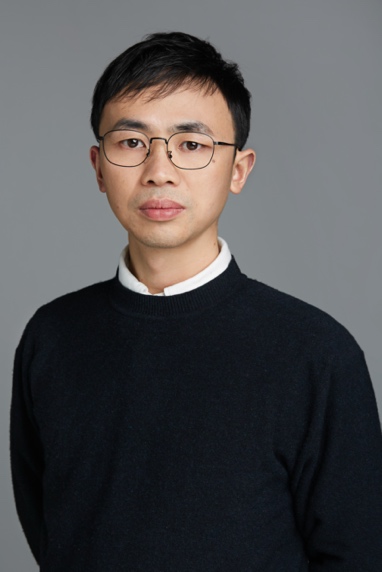
Prof. Yong Xu
Department of Physics, Tsinghua University
主讲人/Speaker:
Dr. Yong Xu is currently a tenured professor at Department of Physics, Tsinghua University and a unit leader at Center for Emergent Matter Science (CEMS), RIKEN. He received his B.S. and Ph.D. degrees both at Tsinghua University, then worked at Fritz Haber Institute of Max Planck Society and Stanford University as a postdoc and a research scholar, respectively. He was awarded Alexander von Humboldt Fellowship of Germany and National Science Fund for Distinguished Young Scholars. His main research interest is to understand/predict emergent quantum phenomena and materials from first principles.
讲座摘要/Abstract:
Ab initio methods based on density functional theory (DFT) have become indispensable to the study of physics, chemistry, materials science, etc., but are bottlenecked by the efficiency-accuracy dilemma. The marriage of ab initio methods and artificial intelligence (AI) has the potential to revolutionize the field. In this talk, I will review an emerging interdisciplinary field of ab initio AI, which applies state-of-the-art AI techniques to help solve bottleneck problems of ab initio computation. In particular, I will introduce our recent works on developing a deep neural network framework to learn the dependence of DFT Hamiltonian (DeepH) on the atomic structure [1-3]. The neural network models are trained by DFT data on small structures and then applied to study unseen material structures without invoking sophisticated DFT computation, making efficient and accurate study of large-scale materials feasible. This development in combination with recent advances of deep learning force fields open the door for neural-network DFT calculations. Very likely, in the near future most ab initio computation will be performed by neural networks, so will materials discovery and design.
References:
[1] H. Li, et al. Nature Computational Science 2, 367 (2022)
[2] X. Gong, et al. Nature Communications 14, 2848 (2023)
[3] H. Li, et al. Nature Computational Science Sci. 3, 321 (2023)
School of Science, Yanyan Chen, Email: chenyanyan@westlake.edu.cn